
Flying Trapeze for Resorts & Hotels
Flying trapeze is one of the few resort attractions that is simultaneously a daily guest activity, a nightly show venue, and a marketing image. Club Med built it into a brand signature across its resorts for decades — and MACA has built and installed the rigs behind several of those programs.
Proven in resort operation
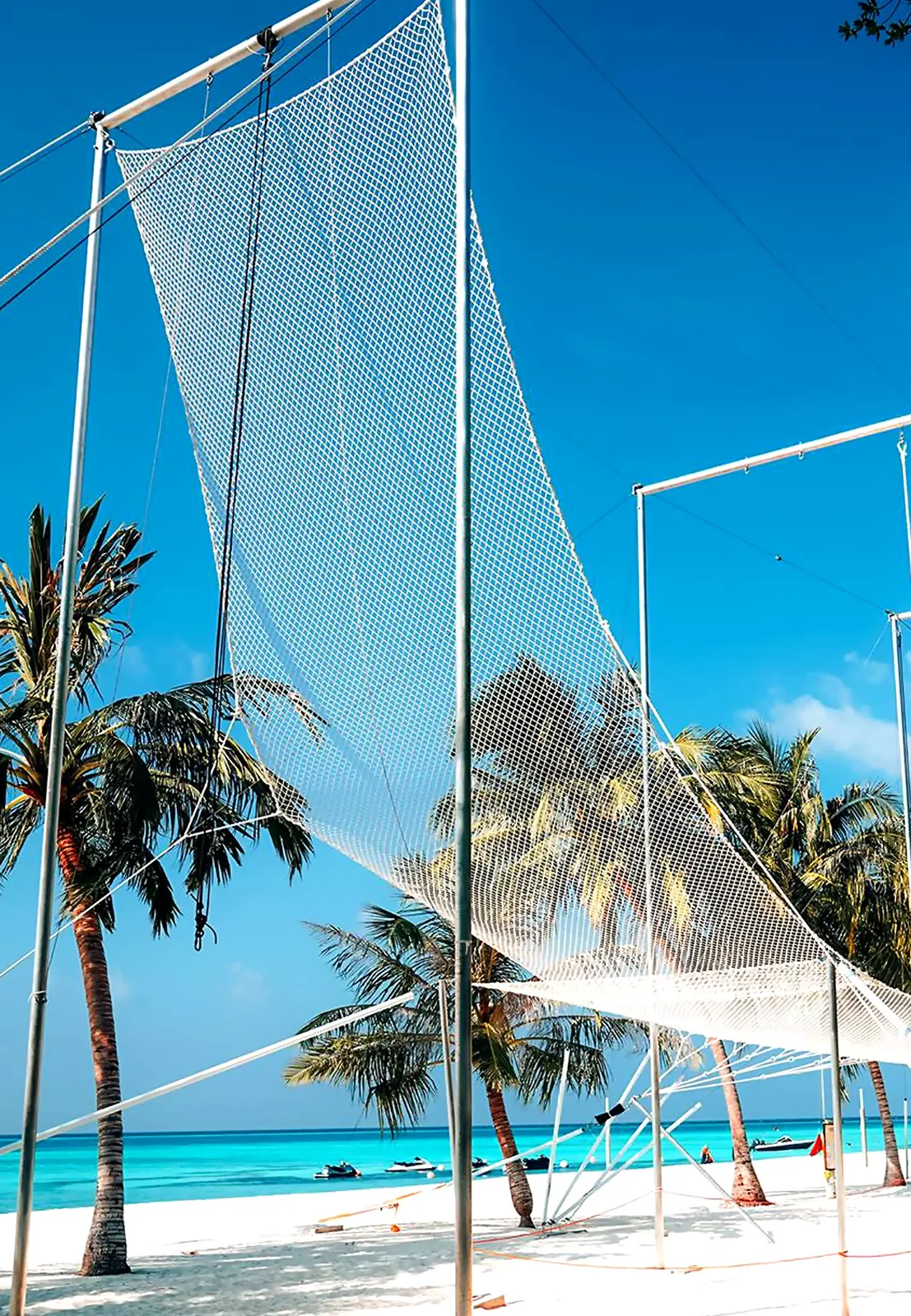
MACA flying trapeze rigs operate at Club Med Kani in the Maldives, Club Med Tomamu in Japan, Club Med Sanya in China, Club Med Borneo in Malaysia, and Shangri-La Hambantota in Sri Lanka — alongside theme park and school installations.
The Maldives installation is the stress test: a rig standing directly on the beach, in permanent UV and salt air, with the UV-treated net, stainless hardware and Sunbrella fabrics specified for exactly these conditions. See all installations →
What does a resort flying trapeze project involve?
Four numbers cover the core project, all published on our pricing page:
| Equipment, with recommended stock & safety packages | $50,850 |
| Installation, setup & testing (est. 4 days) | $4,800–$5,600 |
| Staff training (est. 10 days × $649) | $6,490 |
| Annual inspection (2 days × $749, plus travel) | $1,498/yr |
Prices exclude shipping, taxes, duties and customs; service prices exclude flights and visas, with accommodation, transfers and meals provided by the client. Full exclusions and a worked Maldives example →
How does a rig fit resort programming?
By day, the rig runs guest classes — first-flight sessions are a bucket-list activity that books itself. By night, with floodlighting, the same rig becomes a show venue: sunset performances and guest showcases that fill the entertainment calendar with zero additional capital. Add spectator seating and the attraction programs itself twice a day.
The space requirement is a clear, flat 25 × 35 meters — comparable to two full-sized basketball courts side by side. Site details on the installation page.
De-risking the decision: what procurement will ask
- Certificate of Inspection for public display — issued after every MACA inspection; visible assurance for guests, insurers and auditors
- 5-year maintenance contract at the standard inspection daily rate — a fixed, scheduled maintenance line instead of an open-ended liability
- Staff trained to SOP standard by the manufacturer — estimated 10 days, with written Standard Operating Procedures and safety protocols left behind
- Consumables under control — the Full Stock Package ships with a mount board and minimum stock levels, so worn belts and lines are replaced on schedule, not on failure
- Warranty tied to inspections — the maintenance program and the warranty reinforce each other; see maintenance & safety