
Flying Trapeze Rig Installation & Site Requirements
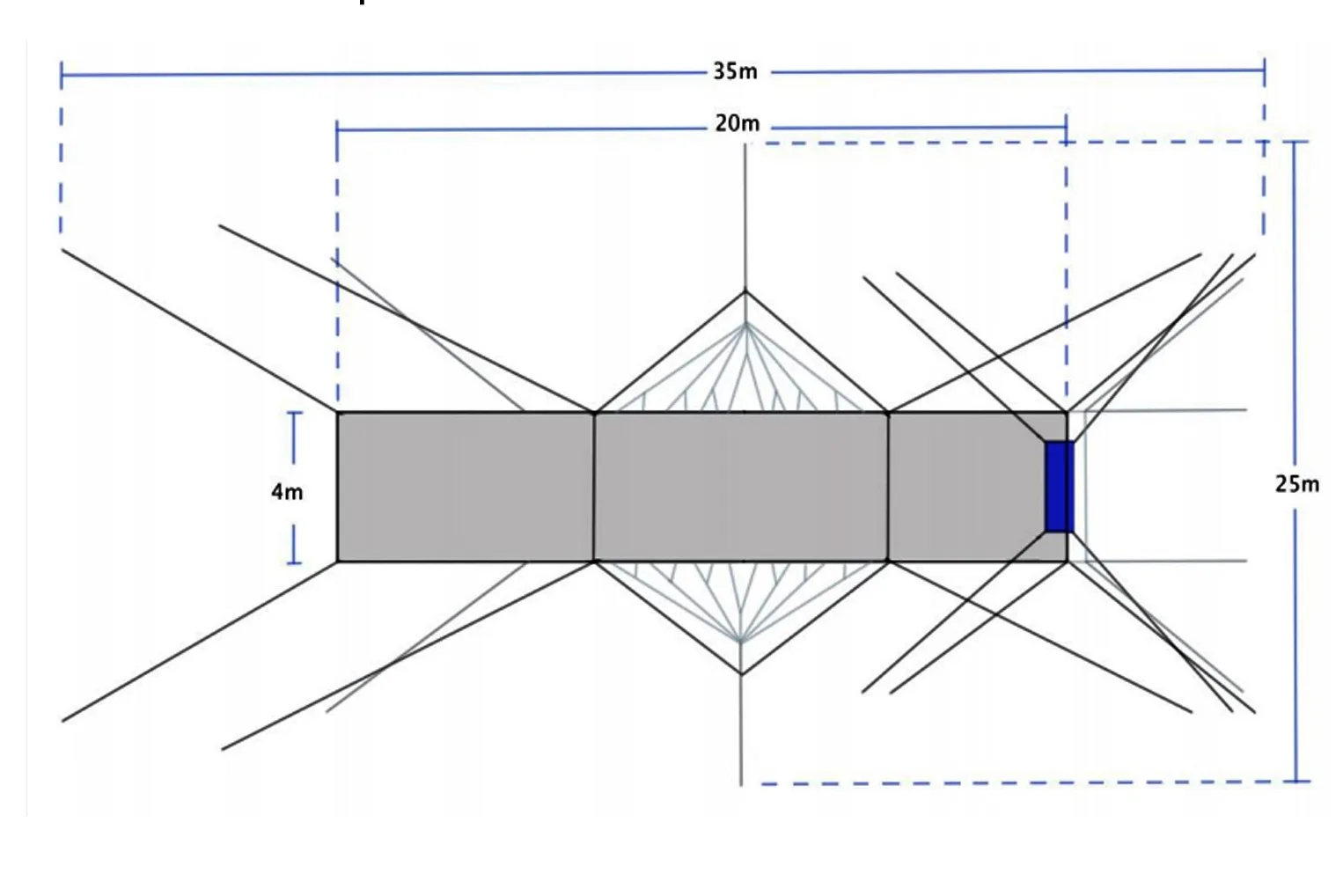
A full-size flying trapeze rig requires a clear, flat area of 25 × 35 meters (82 × 115 ft). Installation by a three-person MACA team takes an estimated 4 days including full testing, and costs USD $4,800–$5,600 plus travel — see full pricing.
How much space does a flying trapeze rig need?
The rig needs a clear, flat piece of land measuring 25 × 35 meters. The main structure occupies approximately 20 m × 4 m within that envelope; the rest of the area is taken by guy cables running out to 24 anchor points around the perimeter.
Beyond the footprint itself, plan for three things that make the difference between an attraction and an operational headache:
- Shaded waiting area for participants — classes queue in tropical sun
- Floodlighting if you intend night operation or evening shows
- Seating for participants and spectators — a flying trapeze rig draws a crowd whether you plan for one or not
Structural anchors: what concrete does the client provide?
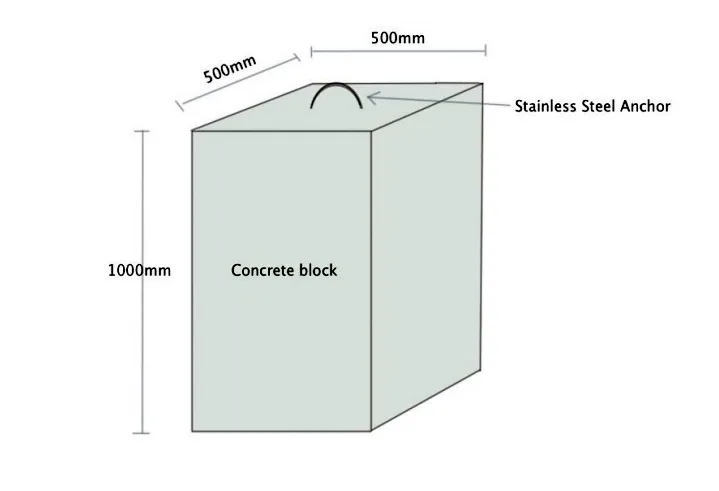
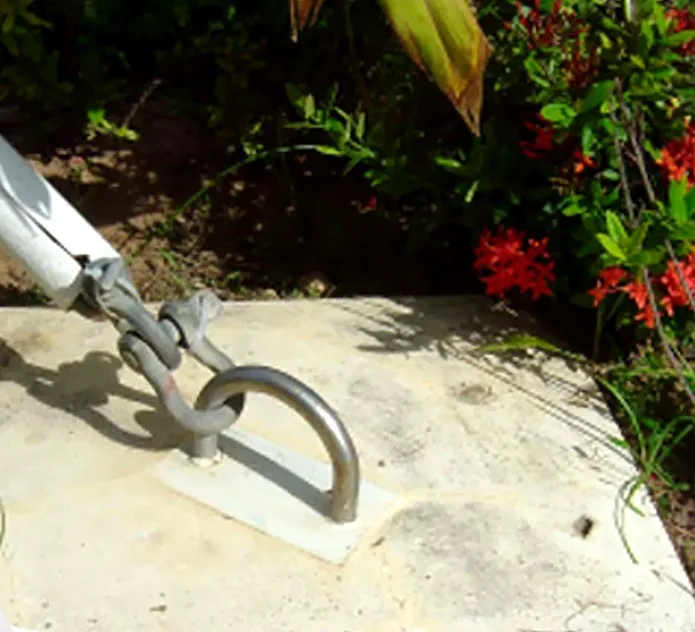
Twenty-four structural anchors must be set before installation begins. MACA supplies solid stainless steel anchors (USD $2,420 per set of 24), shipped in advance of the rig together with full concrete-requirement instructions, so your groundworks are finished before the crew lands.
Each anchor is cast into a concrete block of approximately 500 × 500 × 1000 mm. The client supplies the concrete locally.
Pole placement bases
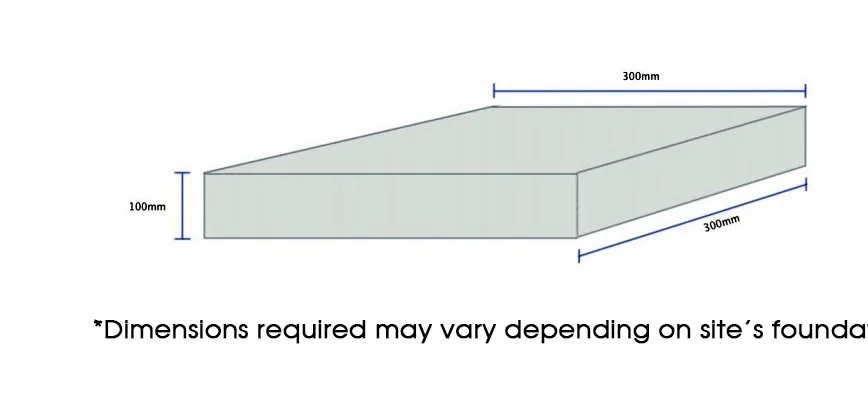
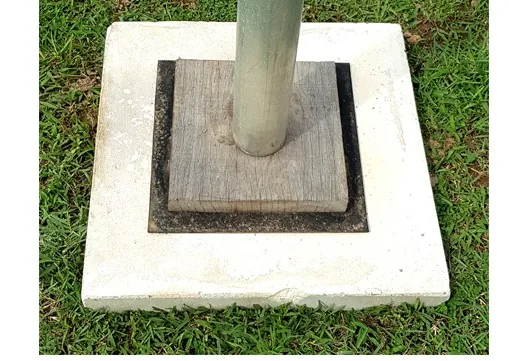
The main rig poles and net poles require 14 concrete bases of 40 × 40 × 10 cm, supplied by the client. Each pole sits on a wooden base of 20 × 20 × 2 cm, also supplied by the client.
Why don’t we ship the wooden bases? Because most countries enforce strict importation laws on wood, and a container held in customs over twenty small timber pads is the most expensive timber you will ever buy. Sourcing them locally is a five-minute job; we give you the exact dimensions.
Dimensions required may vary depending on the site’s foundation — we confirm during the design and site review stage. Send us your site plan.
What happens in the 4-day installation?
Installation, setup and testing costs USD $4,800–$5,600 and is carried out by a three-person MACA team over an estimated 4 days, weather permitting, with assistance from 6–8 local staff provided by the client at certain periods (local staff cost borne by client).
The indicative sequence runs: anchor and groundwork verification → frame raising → cabling and tensioning → net rigging → full testing and handover. The rig is not handed over until testing is complete.
Service prices exclude: return flights and visas. The client provides accommodation, transfers and meals for the MACA team.
What does the client provide?
- Concrete works: 24 anchor blocks (approx. 500 × 500 × 1000 mm each), poured around the MACA-supplied stainless anchors before crew arrival
- 14 concrete pole bases, 40 × 40 × 10 cm
- Wooden bases, 20 × 20 × 2 cm, under poles (local timber — wood import restrictions apply in most countries)
- 6–8 local staff to assist at certain periods of the setup
- Accommodation, transfers and meals for the MACA team; return flights and visas are additional
- Power and floodlighting, if night operation or shows are planned
Want this as a printable checklist? It’s included in the Project Overview PDF — download it here.
Pre-shipment timeline
Anchors ship ahead of the rig, with full concrete instructions, so all site works are complete before the installation crew arrives. Typical lead time is approximately 12 weeks from the date of first payment to shipment, plus sea freight transit to your port. Every project cost is itemized on the pricing page.